Aug 2025 – Jun 2026
TikTok Shop LIVE E-Commerce App
A cross-platform LIVE e-commerce tool for hosts and their operations teams, supporting product management and interactive selling experiences. Focused primarily on TikTok App development, including the product-management framework and sold-item experience for the US auction launch.
- ReactLynx
- TypeScript
- Zustand
- React Context
- Cross-platform
- Organization
- TikTok / ByteDance
- Role
- Frontend Engineer
Some details are omitted for confidentiality
Project overview
TikTok Shop LIVE e-commerce is operated jointly by hosts and assistants from their operations teams. Before a session, the team adds the products it plans to promote to the LIVE shopping bag. During the broadcast, hosts present products and use interactive mechanics such as coupons, flash sales, and auctions to engage viewers and support sales.
Hosts and their operations teams can manage products and LIVE workflows through TikTok App and the PC-based Live Manager. The images below illustrate the overall App + PC product model rather than the auction feature.
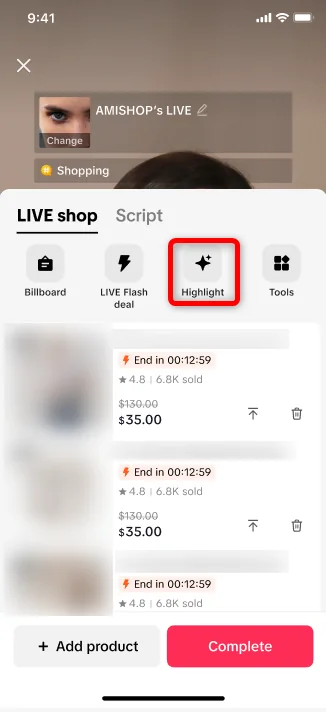
The LIVE Shop product-management entry in TikTok App, shown as overall product context rather than an auction interface.
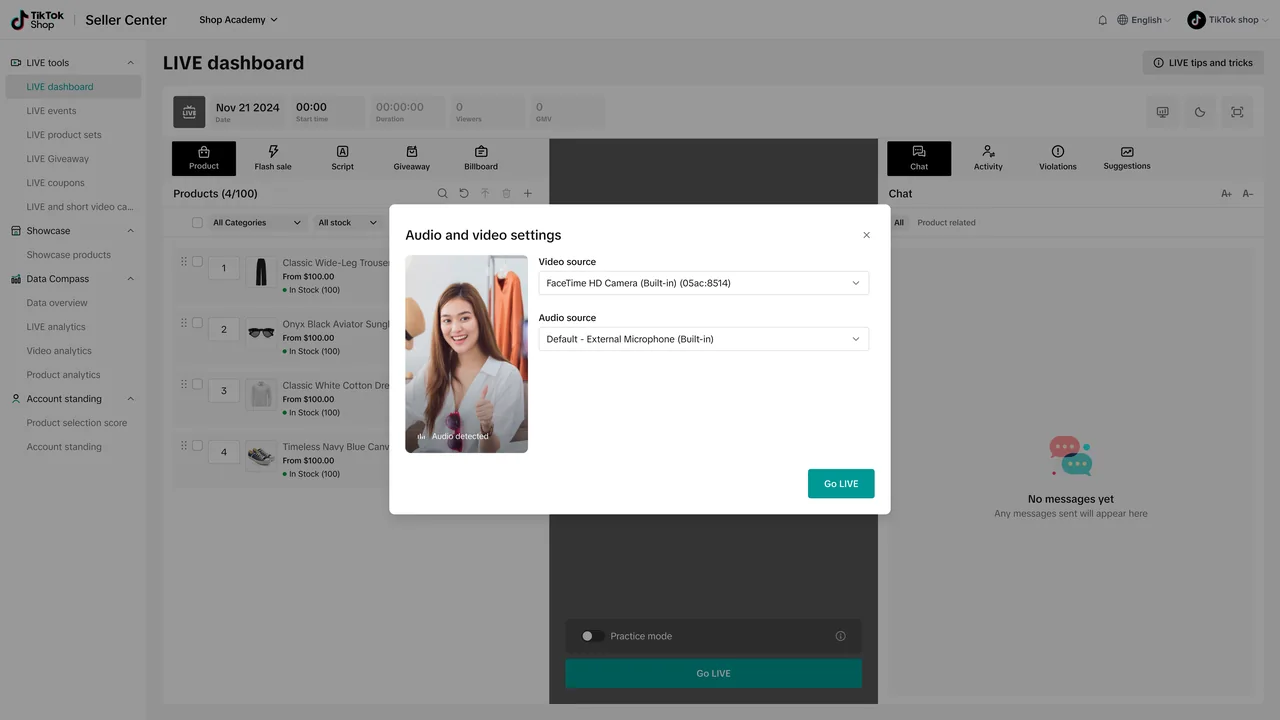
The Live Manager Web control surface, shown to explain the App + PC product model; this case study does not attribute the PC auction delivery to me.
Scope and ownership
I worked on the TikTok Shop LIVE frontend from August 2025 through June 2026 across App and Web surfaces, with most of my focus on App development. The App surfaces used ReactLynx, TypeScript, Zustand, and React Context, allowing a React-style implementation to serve native-rendered interfaces on iOS and Android.
This case study focuses on the App LIVE auction project from January through March 2026. I owned the App product-management framework extension and sold-item module, collaborating with the team to integrate the auction experience. The PC auction experience was delivered by other team members in the second half of 2025 and is not part of my personal delivery in this case study.
App LIVE auction
LIVE Auction introduced real-time bidding to a LIVE session: a host presented an auction product, viewers placed bids from the viewing experience, and the highest bidder received the item when the auction ended. Delivery required coordination across LIVE, seller, payment, and other teams; the LIVE team included approximately three frontend and three backend engineers.
I was responsible for extending the App product-management entry, integrating the three lists, and delivering the post-auction product and order-state experience. Another frontend engineer owned the auction-product list and in-auction states. We jointly integrated the event-notification mechanism and handled the business events needed by our respective modules.
Low-risk integration with an established module
The existing LIVE product-management module had evolved over several years and supported a business-critical workflow, so a broad refactor was not appropriate within the auction delivery window. We extended the existing architecture incrementally with three manually selected lists: regular products, auction products, and sold auction items.
The lists remained relatively independent. Switching tabs requested the destination list again and showed an explicit loading state until current data arrived, preventing stale content from one list from appearing as the state of another. This delivery does not claim retained scroll positions, pagination caches, or filters, and it does not claim to have completed a legacy-module rewrite.
Sold items and state refresh
The sold-item list showed the final sale price and order states such as pending payment, paid, and cancelled. This helped hosts understand a winning viewer’s fulfillment progress and interact appropriately during the LIVE session.
Switching to the Sold items tab requested current order data. When the user remained on another tab, a backend event notified the frontend that a relevant order state had changed. The frontend then requested the latest server state and updated the list, treating the event as an invalidation signal rather than final UI data.
Outcome
The App auction capability launched first in the US in March 2026, initially focusing on categories suited to real-time bidding, including pre-owned luxury goods and trading cards. Early business feedback was positive, and the launch added a competitive real-time bidding experience to TikTok Shop LIVE.
Adoption, transaction volume, and other business metrics remain confidential. This case study makes no further claims about undisclosed metrics or competitor performance.